Loading...
Serving Burlington, VT and surrounding areas. (802) 307-0462
Building a garage, addition, or outbuilding in Burlington takes more than a concrete pour. Vermont frost depth, Champlain Valley clay, and city permit requirements all shape how the work gets done - and whether the slab lasts.
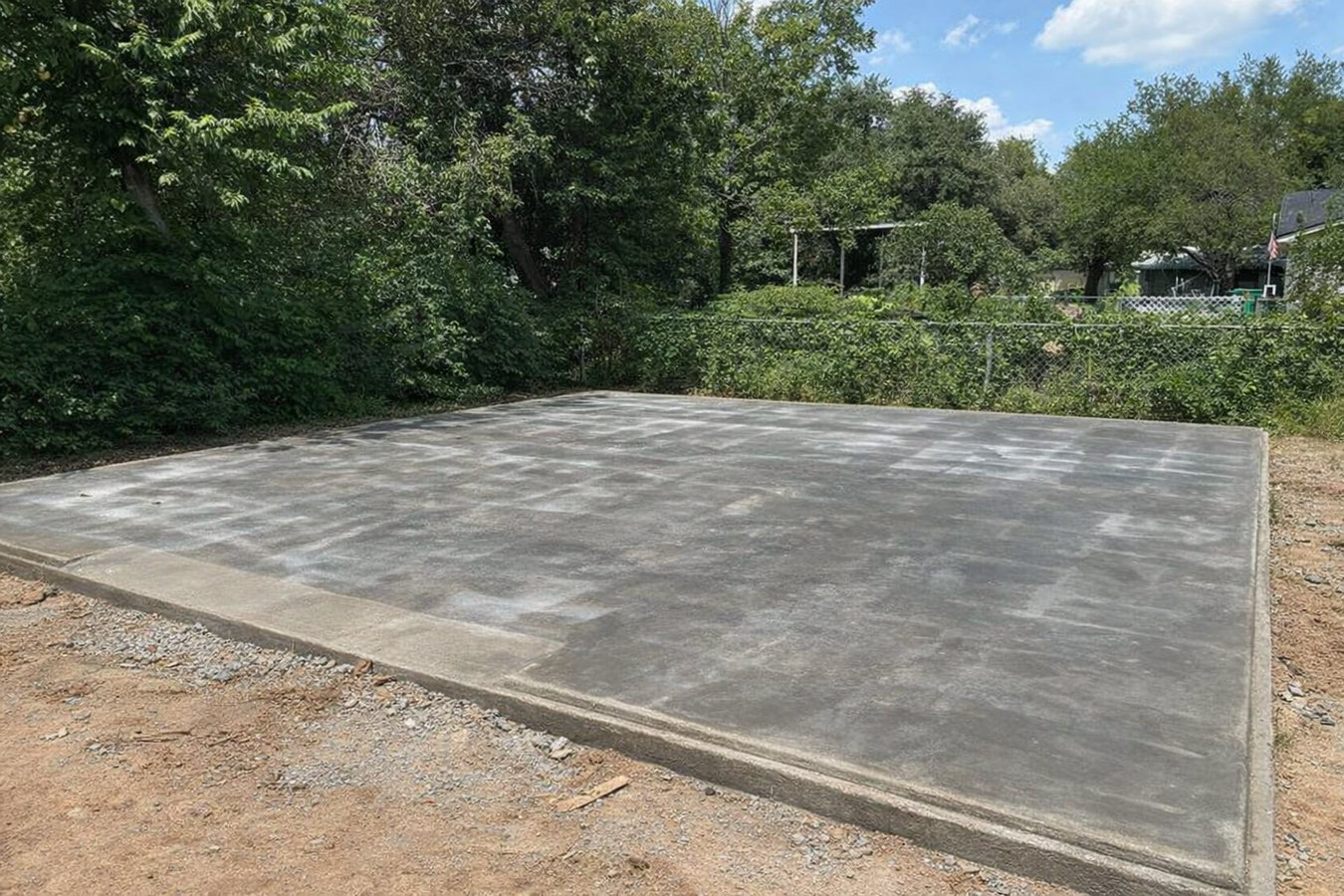
Slab foundation building in Burlington, VT means pouring a thick, reinforced concrete pad on a prepared base with insulation and drainage sized for Vermont conditions - most residential projects run three to five days from site prep through a finished, cured surface.
Burlington homeowners face two conditions that change how this work gets done compared to most of the country. First, the frost line here sits around 48 inches below the surface. If the ground beneath a slab is not properly insulated and drained, the seasonal freeze-thaw cycle will heave the concrete and crack it within a few years. Second, much of Burlington sits on Champlain Valley clay soils that shift under load and hold water longer than sandy or gravelly soil. A slab built without accounting for this will develop cracks and drainage problems that compound every season.
If your project also needs structural support underground, our foundation installation service covers full basement and crawl-space foundations for larger builds.
If you are planning to add a room, a garage, a workshop, or a shed with a permanent floor, you will need a slab foundation to support it. In Burlington, any structure attached to your home or over a certain size requires a permit, which means the foundation needs to meet current standards. Starting the conversation with a contractor early helps you understand what the ground prep will involve and what it will cost.
Hairline cracks in older concrete are common and often cosmetic, but cracks you can fit a finger into, or sections of the slab that have shifted up or down relative to each other, are signs the ground beneath has moved. In Burlington, this kind of movement is often caused by the freeze-thaw cycle working on a slab that was not properly insulated or drained when it was built. A contractor can assess whether the slab can be repaired or needs to be replaced.
If you notice water sitting on your garage floor or patio slab after rain or after snow melts in spring, the slab may not be draining correctly. Burlington gets significant spring snowmelt, and a slab that holds water rather than shedding it is under constant stress. Over time, that moisture works into small cracks, freezes in winter, and makes them larger - a problem that compounds every year if not addressed.
Many older Burlington properties have outbuildings or additions that were built decades ago without permits or proper foundation work. If you are tearing down or replacing one of these structures, the old slab underneath may not meet current standards and may need to be removed and replaced rather than reused. A contractor can tell you quickly whether the existing concrete is worth keeping.
We pour concrete slab foundations for garages, home additions, workshops, and outbuildings throughout Burlington and surrounding communities. Every project starts with a site visit - we look at your soil conditions, ground slope, and access before putting a number on anything. We pull the required city permits and schedule inspections so you do not have to manage that process yourself. When the scope calls for deeper structural work underground, our concrete footings service ensures the anchor points below your slab are built to survive Vermont's frost depth.
Every slab we build includes the prep work that most homeowners do not see but that determines whether the concrete holds up: topsoil removal, compacted granular base, rigid foam insulation below the slab, steel reinforcement embedded before the pour, and finish grades that move water away from the structure. These are not upgrades - they are standard practice for any slab that is supposed to last in this climate. We finish every job with a walkthrough that explains control joints, curing timeline, and what to watch for in the first few months.
Reinforced slabs sized for vehicle loads, with drainage grades and a smooth finish that is easy to clean and maintain.
Slabs for home additions where the new foundation needs to connect cleanly to the existing structure and meet current building standards.
Smaller slabs for sheds, workshops, or permanent outbuildings - with proper insulation and drainage even for standalone structures.
Burlington winters push frost deep into the ground - around 48 inches in a hard year. Every year, that frozen soil expands and then contracts again when it thaws. A slab not built with this in mind, using proper insulation and a well-drained gravel base, can crack within just a few seasons. This means slab work in Burlington requires more preparation than in warmer states, and that preparation affects both the cost and timeline. Burlington also has a short outdoor construction season - roughly late April through October - which means getting your permit and contractor lined up early is the difference between starting on time and waiting a full year.
Much of Burlington sits in the Champlain Valley on clay-heavy soils that hold water and shift more than sandy or gravelly ground. A concrete slab contractor who knows these conditions will use a deeper gravel base and grade the finished surface so water drains away from the slab. We regularly work across Burlington and serve homeowners in South Burlington and Williston, where similar soil and frost conditions apply. If you have an older Burlington home with an addition or garage on a slab that was built before current standards, a site assessment can tell you quickly whether that concrete is still sound.
We ask about what you are building, the rough size, and whether you already have a permit or are starting fresh. We then schedule a free on-site visit before quoting anything - conditions on your property affect the price, and a quote given without a site visit is not a reliable number.
Once you agree on scope and price, we apply for the building permit through the City of Burlington. This step typically takes one to two weeks. We handle the paperwork - you may need to sign as the property owner, but you will not need to navigate the permit office yourself.
Before any concrete is mixed, the crew removes topsoil, grades the area flat, and lays a compacted gravel base. In Burlington, this stage also includes placing rigid foam insulation underneath the slab to protect against frost heave. This preparation work typically takes one to two days and determines whether your slab holds up over decades of Vermont winters.
The pour itself usually happens in a single day. You can walk on the slab within 24 to 48 hours, but full strength develops over about four weeks. Burlington's building inspector will schedule a final inspection during this period - we coordinate that, so you do not need to arrange it yourself.
We visit your property before quoting. No surprises, no pressure - just a straight number based on your actual site.
(802) 307-0462Burlington's frost line sits around 48 inches below the surface. We install rigid foam insulation beneath every slab and use a properly compacted gravel base so the ground's freeze-thaw movement does not crack your concrete. Skipping this step is the most common reason slabs fail here.
We handle the City of Burlington permit process from start to finish. That means a city inspector verifies the prep work before the pour - giving you an independent confirmation the job was done correctly. The permit also creates a record that protects you when you sell the home.
Much of Burlington sits on clay soils that hold water and shift under a slab over time. We use a deeper gravel base and finish grades that shed water away from the slab, reducing the moisture pressure that leads to cracking. The American Concrete Institute sets standards for this work - we build to them.
Every quote we deliver is written and itemized after we have actually seen your property. You will understand what the gravel base, insulation, labor, and permit each cost before anyone breaks ground - no surprise charges when the crew discovers your soil is more clay-heavy than expected.
Every one of these points comes down to the same thing: a slab that holds up through Vermont winters and does not create problems for you three or five years after the pour. The American Concrete Institute sets professional standards for this type of work, and those standards exist because shortcuts in slab prep always show up eventually - usually right after Burlington's hardest winter.
Full basement and crawl-space foundation installation for new homes and major additions across Burlington.
Learn MoreFrost-rated footings poured below Vermont's 48-inch frost line to anchor structures that last through every winter.
Learn MoreBurlington's construction window is short - get your permit and crew locked in now so your project is done before the ground freezes.