Loading...
Serving Burlington, VT and surrounding areas. (802) 307-0462
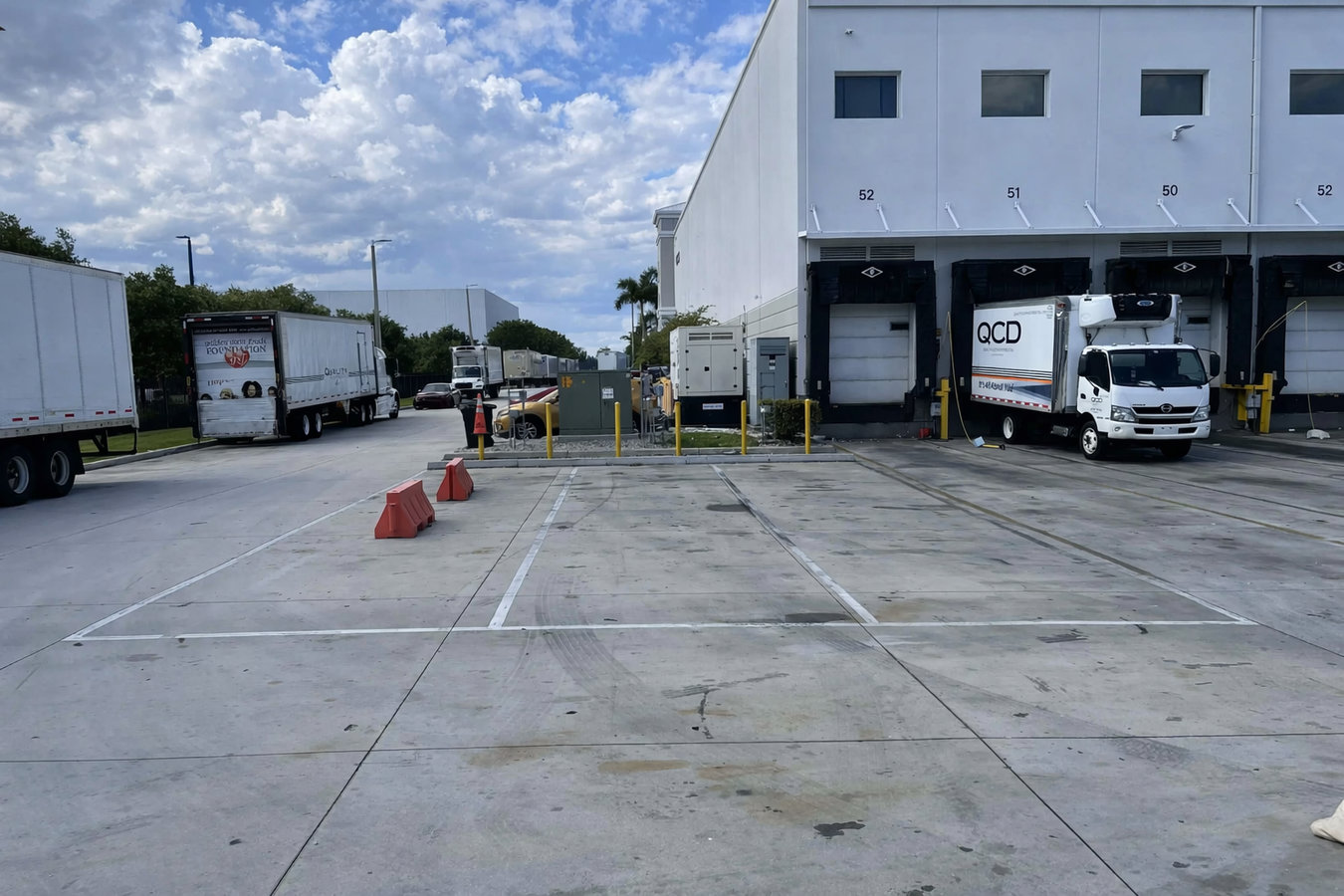
Mud season, cracked pavement, and pooling water are not just nuisances - they cost you time and money every year. We build concrete parking lots with the base depth and drainage design that Burlington winters actually demand.
Concrete parking lot building in Burlington, VT involves excavating the site, compacting a crushed-stone base, and pouring a reinforced slab with control joints and surface drainage - most small-to-medium lots take two to five days from start to finish, with vehicles kept off for four weeks while the concrete cures.
Burlington homeowners face a combination that makes parking lot work more demanding than in most of the country. The ground freezes and thaws repeatedly throughout fall, winter, and spring - over 150 cycles a year - which means the base preparation beneath the slab matters as much as the concrete itself. A weak or shallow base is the number-one reason parking lots crack and heave prematurely here. On top of that, the City of Burlington has stormwater requirements that apply to new paved surfaces, so drainage has to be designed into the project from the start.
If you are also planning structural work beneath or near your lot, our concrete footings service ensures anything built alongside or above ground has a frost-rated foundation to stand on.
If sections of your existing paved area rise, tilt, or crack in a pattern that worsens after winter, that is freeze-thaw damage working from underneath. In Burlington, this happens when the base layer was not built deep enough to handle repeated freezing and thawing. Patching the surface is only a temporary fix - a full replacement is usually the more cost-effective long-term answer.
Burlington's spring thaw can turn unpaved parking areas into a muddy mess for weeks, damaging vehicles and making a poor impression on visitors. A concrete parking lot solves the problem permanently. Concrete does not rut, wash out, or require annual regrading the way gravel does.
Standing water on a paved surface signals that drainage is not working correctly. In Burlington, where heavy spring rains and snowmelt are both common, pooling water accelerates surface wear and can work its way under the slab and weaken the base. If you regularly see puddles that take hours or days to drain, a new lot with proper grading is worth considering.
A crack or two in an older surface is normal. But if you see a network of cracks spreading across a large portion - especially cracks wide enough to catch a finger - the structural integrity of the slab is likely compromised. Continued patching costs money without solving the underlying problem, and a full replacement is usually the smarter investment.
We build new concrete parking lots for residential and small commercial properties throughout Burlington and the surrounding area. Every project starts with a free on-site visit where we assess the existing surface, soil conditions, drainage patterns, and access for equipment. We handle the permit application with the City of Burlington on your behalf, and we design drainage grading into every lot from the beginning - not as an add-on after the fact. When your project also involves other paved areas on the property, our concrete driveway building service uses the same base-depth approach so connected surfaces hold up the same way.
The work includes full excavation, base compaction with crushed stone, forming, pouring, and finishing with control joints cut into the surface. Control joints are the shallow grooves you see in a grid pattern - they guide any future cracking into predictable lines rather than letting it run randomly across the slab. We finish every job with a walkthrough that explains the curing period, what to watch in the first season, and when sealing makes sense to extend the surface life.
Full-build concrete lots for properties that currently have gravel, dirt, or no defined parking surface at all.
Removal of a failed asphalt or deteriorated concrete surface, followed by a properly engineered new pour.
Grading, slope, and channel design built into every lot to meet Burlington stormwater requirements and keep water moving away from your building.
Burlington's older neighborhoods - the Hill Section, the Old North End, many streets in the South End - were developed before modern pavement engineering standards existed. Many properties have gravel areas or aging paved surfaces that were never properly graded or built with a compacted base. When Burlington's deep winter frost cycles work on those surfaces year after year, the result is what you see all over the city every spring: heaving, cracking, and pooling water. The Portland Cement Association outlines how base preparation and drainage design determine the long-term performance of a concrete parking surface. Burlington also has its own stormwater program administered by the Department of Public Works, which means new lots must be designed to handle runoff correctly from day one.
We serve properties throughout the Burlington area, including South Burlington and Colchester, where the same freeze-thaw conditions and similar permitting considerations apply.
Tell us what you need and we schedule a free on-site visit. We look at the size of the area, current ground conditions, how water drains, and access for equipment. Most written estimates are delivered within one business day of the visit.
We handle the permit application with Burlington's Department of Public Works on your behalf - confirm this is included before signing anything. Permit approval typically takes a few business days to a couple of weeks depending on scope. We also assess whether stormwater requirements apply to your lot size.
Once permits are in hand, the crew excavates the area to the right depth, then brings in and compacts a layer of crushed gravel to create a stable base. This stage is the loudest part of the project, and the area will be completely off-limits to vehicles and foot traffic.
On pour day, the crew places, spreads, and finishes the surface before the concrete begins to set. Control joints are cut in and edges are finished cleanly. After the pour, we walk the finished surface with you and give you a clear timeline for when the lot is ready to use - vehicles should stay off for four weeks.
Free on-site estimate. Permits handled. No surprise costs.
(802) 307-0462Burlington averages more than 150 freeze-thaw cycles per year, and the base under your lot is the single biggest factor in how long it holds up. We excavate and compact to the depth Vermont's winters actually require - not the minimum we can get away with. That is the difference between a lot that cracks in three years and one that holds for decades.
Burlington has real requirements around how new paved surfaces manage rainwater, and a lot not designed with drainage in mind can create problems with the city. We grade every lot so water flows away from buildings and toward a safe outlet, and we design to meet local stormwater requirements from day one.
Unpermitted paved surfaces are a liability when you sell or refinance a property. We pull the required permits with the City of Burlington before any work begins, so your lot is on record, inspected, and fully above board. The American Concrete Institute sets the professional standards we follow.
One of the biggest fears homeowners have when hiring a contractor is a quote that balloons once work starts. We provide a written estimate covering every part of the job - including the permit - before we ask you to commit to anything. No surprises on the final invoice.
Every one of these details - base depth, drainage design, permit handling, written scope - comes from understanding what actually causes parking lots to fail in Burlington. We build the way Vermont's climate demands, not the way it might be done in a state where the ground stays frozen a month and thaws cleanly.
Frost-rated footings poured below Burlington's freeze line for structures that stay put through Vermont winters.
Learn MoreResidential concrete driveways built with the same base depth and drainage approach as our commercial lots.
Learn MoreBurlington's concrete season runs late April through October, and good crews fill fast once the ground thaws - reach out now so permits and planning do not push you into next year.