Loading...
Serving Burlington, VT and surrounding areas. (802) 307-0462
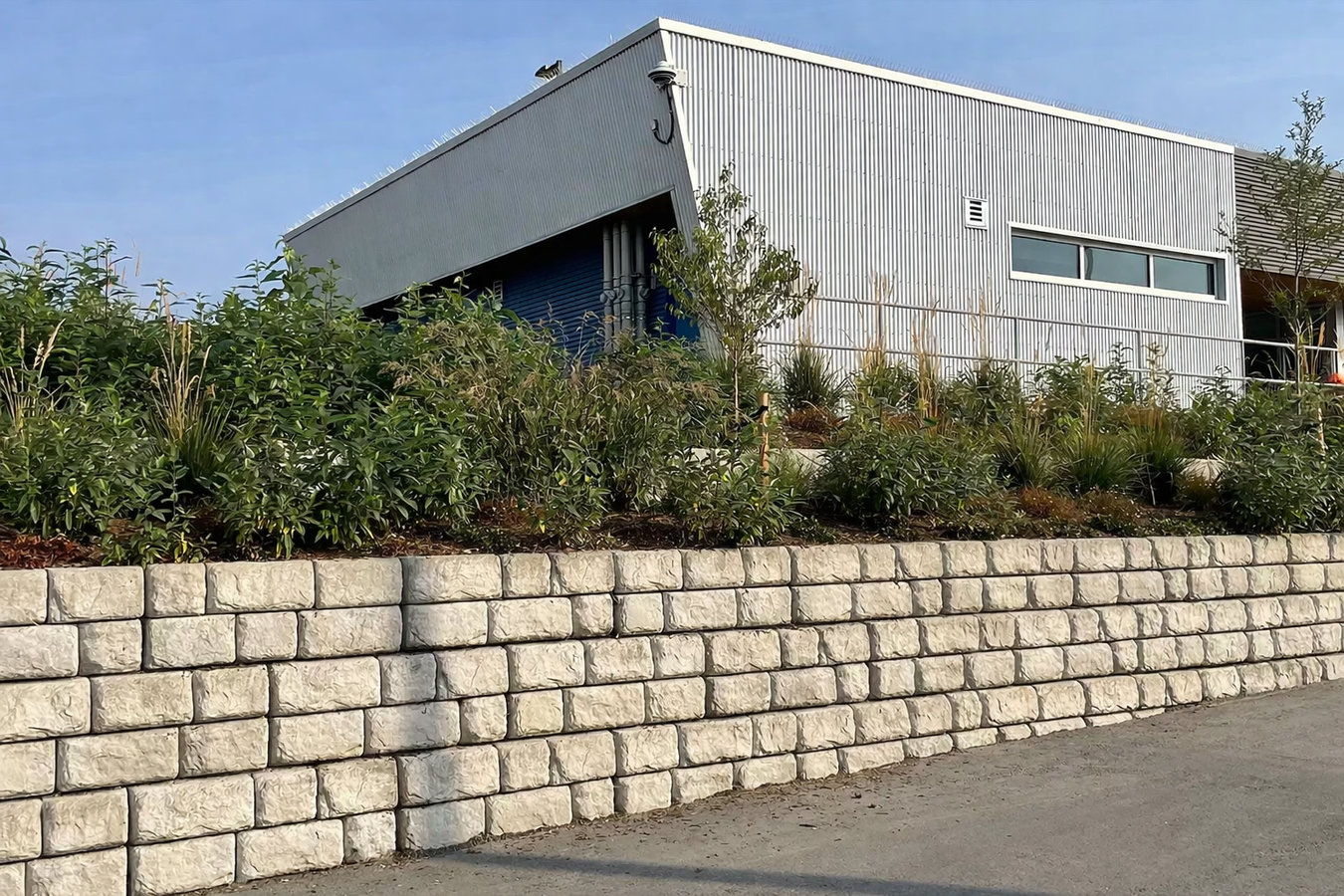
Sliding soil, a leaning wall, or water pushing toward your foundation - these problems get worse every season you wait. We build concrete retaining walls with the deep footings and drainage that Burlington soil and weather actually require.
Concrete retaining walls in Burlington, VT hold back soil on sloped or uneven ground by combining a deep poured footing, a reinforced wall, and a drainage system behind it - most residential projects run two to five days from excavation to a finished, stable structure.
Burlington homeowners deal with two conditions that most of the country does not: a frost line that sits around 48 inches below the surface, and heavy Champlain Valley clay that holds water rather than draining it. Both of those factors matter enormously when building a retaining wall. A footing that is not deep enough will shift as the ground heaves and thaws each winter. A wall without proper drainage will eventually crack or topple from the water pressure building behind it.
If you are dealing with moisture issues alongside soil movement, our concrete floor installation service can address drainage and moisture concerns in your basement at the same time.
If you can see soil creeping downhill after a rain - especially toward your driveway, foundation, or a neighbor's property - that is erosion in progress. Burlington's clay soils become especially slippery when saturated, and what starts as a small slide can accelerate quickly once the ground is destabilized.
A retaining wall that is tilting forward or showing horizontal cracks near the base is under more pressure than it can handle. This is common in Burlington's older neighborhoods where walls were built without deep footings or proper drainage, and it tends to get worse each winter as the freeze-thaw cycle works on the structure.
If water collects near your home's foundation after heavy rain or during spring thaw, the grade of your yard may be pushing water the wrong way. A retaining wall, combined with regrading, can redirect that flow away from your home before it causes basement moisture problems.
If part of your yard is so steep that mowing it feels dangerous, or you have simply given up on it, a retaining wall can create a level terrace that is actually usable. Many Burlington homeowners on hillside lots discover that a well-placed wall transforms an unusable slope into a garden, patio, or play area.
We build poured concrete and concrete block retaining walls for residential properties throughout Burlington and the surrounding area. Every wall starts with an on-site assessment of the slope, soil type, and drainage conditions before we design anything. We also handle the permit process with the city for walls over four feet tall - you should not have to chase that down yourself. When the project needs strong structural support below ground, our concrete footings work ensures that foundation is built to last.
Beyond the wall itself, we install the drainage system behind it - a layer of crushed stone and a perforated drain pipe that gives water a clear path out. This is not an optional add-on in Burlington's clay soils - it is what keeps the wall standing when the ground is saturated. We finish every job with careful backfill compaction in layers, so the soil behind the wall settles evenly rather than creating new pressure points.
The strongest option for taller walls or challenging slopes - formed and poured on-site for a seamless, reinforced structure.
A practical choice for moderate-height residential walls where design flexibility matters alongside durability.
Multiple shorter walls stepping up a steep slope - ideal for homeowners who want to create usable flat areas on a hillside lot.
Burlington is built on a hillside that slopes toward Lake Champlain, and many of the city's older neighborhoods - the Hill Section, the Old North End, the South End - sit on terrain that was graded by hand, not engineered. That means slopes, drainage patterns, and soil conditions that were never designed with modern retaining structures in mind. Add in Burlington's Champlain Valley clay, which swells when wet and puts enormous lateral pressure on anything holding it back, and you have a combination that demands walls built specifically for these conditions. The Portland Cement Association outlines best practices for concrete retaining wall construction, and the American Concrete Institute sets the standards contractors should follow for structural concrete in freeze-thaw climates.
We serve homeowners throughout the Burlington area. If you are in South Burlington or Winooski, the same frost and clay conditions apply - and so does the same approach to building walls that last.
Tell us what you are seeing on your property and we schedule a free on-site visit. We look at the slope, soil, and drainage conditions before quoting anything. Most written estimates are delivered within one business day of the visit.
If your wall will be taller than four feet, we pull the building permit from Burlington's Development and Zoning office. We handle the paperwork - you may need to sign an authorization form, but the legwork is ours. Budget two to four weeks for permit review.
We dig below Burlington's frost line before pouring the footing that anchors the wall. This step separates a wall built to last from one that shifts within a few years. We also call Vermont 811 (Dig Safe) before any excavation begins.
With the footing set, the wall goes up and drainage material is installed behind it simultaneously. Soil is then placed and compacted in layers. The crew walks you through the curing period before leaving the site clean.
Free on-site estimate. We handle permits. No surprise costs.
(802) 307-0462Burlington's frost line sits around 48 inches below the surface. We pour every footing deep enough to stay put through Vermont's hardest winters. A shallow footing is the most common reason retaining walls fail here - we do not cut that corner.
Champlain Valley clay holds water longer than most soils, and trapped water is the leading cause of retaining wall failure in this area. We design drainage into every wall from the start - not as an afterthought - so pressure never builds up behind it.
Unpermitted retaining walls are a real issue in Burlington's older neighborhoods and can create problems when you sell. We handle the permit process with the city before we break ground, so your wall is on record, inspected, and fully above board.
Every estimate we provide describes the footing depth, drainage design, wall type, and backfill plan in writing. The American Concrete Institute sets professional standards for this work, and we build to them - not to whatever is fastest.
Every one of these details - footing depth, drainage design, permit handling, written scope - comes from understanding what actually causes retaining walls to fail in Burlington. We build walls the way they need to be built here, not the way they might be built somewhere with milder winters and sandier soil.
New basement or garage floors poured with the right mix and moisture barrier for Burlington's climate.
Learn MoreDeep, frost-rated footings that give structures the stable base they need to survive Vermont winters.
Learn MoreBurlington's construction season is short and crews book fast once the ground thaws - reach out now so permits and planning do not push you into next year.