Loading...
Serving Burlington, VT and surrounding areas. (802) 307-0462
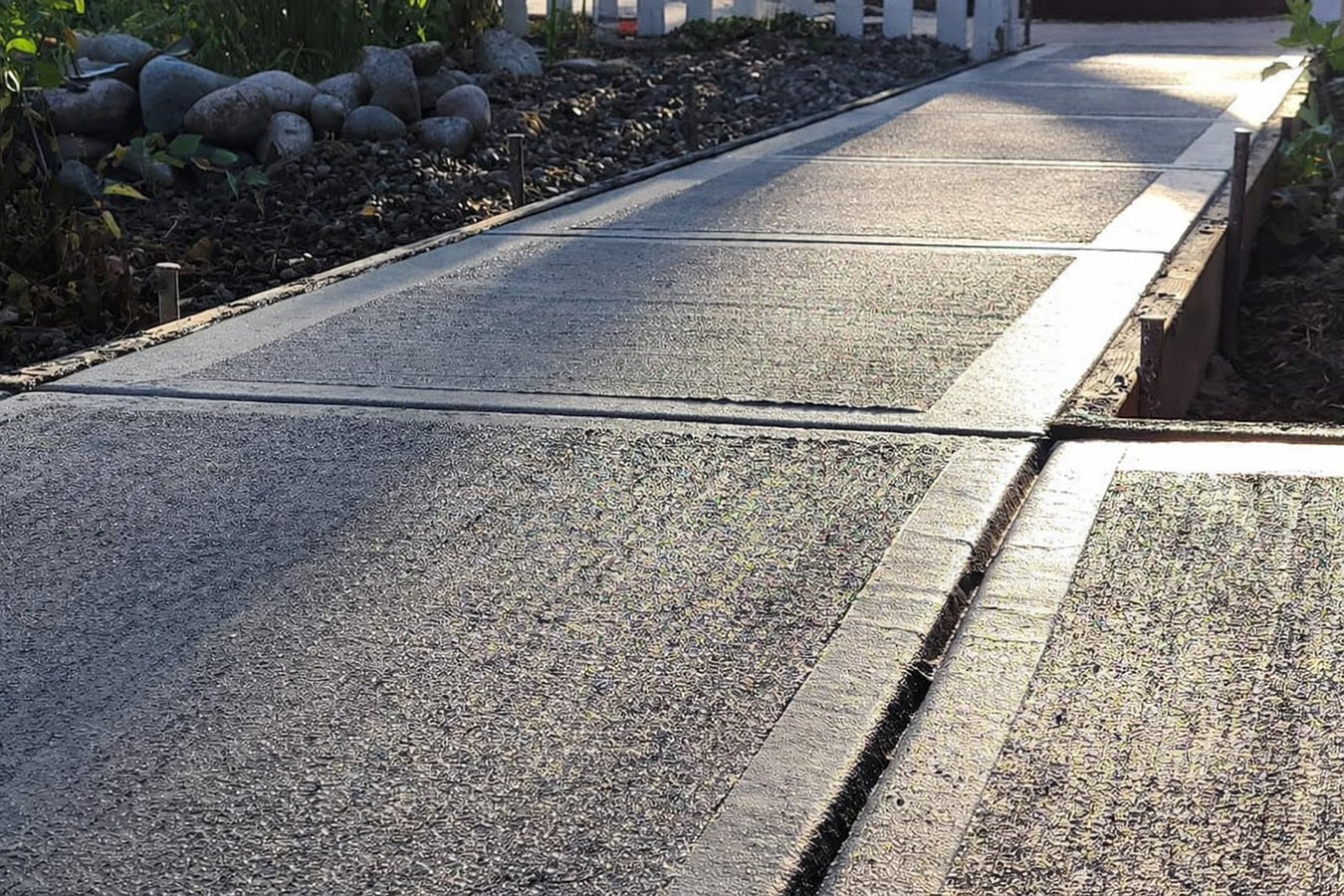
Cracked, heaving, or unsafe sidewalks don't fix themselves. Get a properly built replacement that holds up through Vermont winters.
Concrete sidewalk building in Burlington involves removing the old surface or preparing bare ground, adding a compacted gravel base for drainage and stability, forming the edges, then pouring and finishing the concrete - most residential sidewalk jobs take one to two days of active work, with the surface ready for foot traffic in 24 to 48 hours.
The part homeowners often don't see - the gravel base and compaction work underneath - is what determines whether a sidewalk lasts 30 years or starts cracking and shifting within five. If you are also replacing a concrete driveway at the same time, combining both projects in a single mobilization often reduces total cost.
In Burlington, where freeze-thaw cycles and road salt are both hard on concrete surfaces, the quality of the mix and the depth of the base are not optional upgrades - they are the baseline for a sidewalk that does its job year after year. The Portland Cement Association publishes guidelines on cold-weather concreting that reflect what responsible contractors already do on every Vermont job.
If one slab sits noticeably higher or lower than the one next to it, that is a trip hazard. In Burlington, frost heave pushes concrete upward in winter and then settles it unevenly when it thaws. Once slabs have shifted significantly, surface patching will not fix the underlying problem.
If the top layer is peeling away or has rough, pitted patches that get worse each spring, the concrete has been damaged by repeated freeze-thaw cycles and salt exposure - both very common in Burlington. Surface scaling like this spreads over time and cannot be permanently fixed with a patch.
Hairline cracks are normal and usually not urgent. But if you can fit the edge of a coin into a crack, or if the two sides sit at different heights, the structural integrity of that slab is compromised. Wide or stepped cracks are especially common in Burlington's older neighborhoods.
A properly built sidewalk has a slight slope so rainwater and snowmelt run off to the side. If you notice puddles forming on your sidewalk, the slab may have shifted or was never graded correctly. Standing water accelerates freeze-thaw damage and makes the surface slippery.
We build new sidewalks, replace existing ones, and extend sidewalk runs to connect driveways, entries, and front paths. Every installation includes full base preparation - excavation, gravel compaction, and proper grading so water drains away from your foundation rather than toward it. Control joints are cut into the surface at appropriate intervals to give the concrete a place to flex through Burlington's temperature swings without random cracking in the middle of a slab. Most residential sidewalks are poured four inches thick; sections that cross a driveway or need to carry vehicle weight are poured six inches thick. If you are planning a larger outdoor project, our garage floor concrete service can be scheduled alongside a sidewalk replacement to reduce mobilization costs.
Surface finish matters for safety in a Vermont winter. We apply a broom finish as standard on all sidewalks - the fine ridges create traction in wet and icy conditions, unlike a smooth-trowel finish that becomes slippery when wet. For homeowners who want a more decorative result, stamped finish options can be added to any sidewalk installation. The American Concrete Institute sets the standards for mix design and cold-weather installation practices that guide our work on every Burlington job.
Suits homeowners with heaved, crumbling, or extensively cracked sidewalks that cannot be patched effectively.
Suits homeowners adding a front walkway or connecting a driveway to an entry for the first time.
Suits homeowners extending an existing sidewalk run to a new driveway, addition, or garage.
Suits homeowners who want a functional surface with a pattern or texture that complements older Burlington homes.
Burlington's construction season runs roughly late April through October, and even that window has cold snaps at either end. Contractors fill up fast in spring and early summer because everyone is trying to get outdoor work done in the same narrow stretch of time. The freeze-thaw cycle - more than 150 crossings of the freezing point per year - puts stress on concrete as water seeps into tiny pores, freezes, expands, and then thaws. A sidewalk that might last 30 years in a warmer climate can start cracking within five years here if it was not built to handle Vermont winters. Homeowners in Winooski and Colchester face the same seasonal and soil conditions as Burlington and need the same level of base preparation and cold-climate mix design.
Burlington's residential neighborhoods - including the Hill Section, the South End, and the Old North End - are full of homes built in the late 1800s and early 1900s. Many properties have original sidewalks with tree roots growing underneath that have heaved the slabs. Removing old concrete and dealing with root intrusion takes more time and equipment than a straightforward new pour, which is why demolition and removal costs can add meaningfully to a Burlington sidewalk project. Road salt and chemical de-icers are also hard on concrete, especially in the first year after a pour. A sealer applied after full curing - combined with using sand instead of salt for at least the first winter - gives a new sidewalk the best chance of lasting.
We ask a few basic questions about your sidewalk - roughly how long it is and whether you are replacing existing concrete or starting fresh. You will hear back within one business day to schedule an on-site visit.
We measure the area, look at the ground conditions, and note any tree roots or access issues. A written estimate that breaks out square footage, prep work, and cleanup follows - no vague lump-sum numbers.
If your sidewalk is in the public right-of-way, we pull the required City of Burlington permit before work begins - you should not have to navigate city paperwork on your own. We then schedule your project during the appropriate weather window.
Old concrete is broken up and hauled away, the base is graded and compacted, and the new sidewalk is poured with a broom finish for grip. Control joints are cut, and the site is cleaned before the crew leaves.
Written estimate, permits handled, one business day response. No sales pressure.
(802) 307-0462Burlington's DPW has rules about sidewalk work in the public right-of-way, and we know them. We pull the required permits before work starts so your project is legal on record and does not come back as a problem when you sell your home.
The compacted gravel base underneath the concrete is what separates a sidewalk that holds through 30 Vermont winters from one that heaves and cracks within five. We do not rush or skip that step - it is the most important part of the job.
We have worked across Burlington's neighborhoods, including properties with mature trees, tight lots, and decades-old concrete that needs careful removal. Local experience means fewer surprises on your project.
Burlington's outdoor concrete window is limited, and we plan our schedule so your project happens when we said it would - not pushed to next spring because the calendar filled up. Reach out early to hold your spot.
Getting the permits right, the base right, and the schedule right are the three things that determine whether a Burlington sidewalk project goes smoothly - and they are the three things we focus on before any concrete is poured.
New or resurfaced garage floor installations with the same cold-climate mix and base standards used on all our Burlington work.
Learn MoreFull concrete driveway installations that can be scheduled alongside a sidewalk replacement to save on mobilization.
Learn MoreBurlington's concrete window is short - reach out now and lock in your spot on the schedule while there is still time this season.